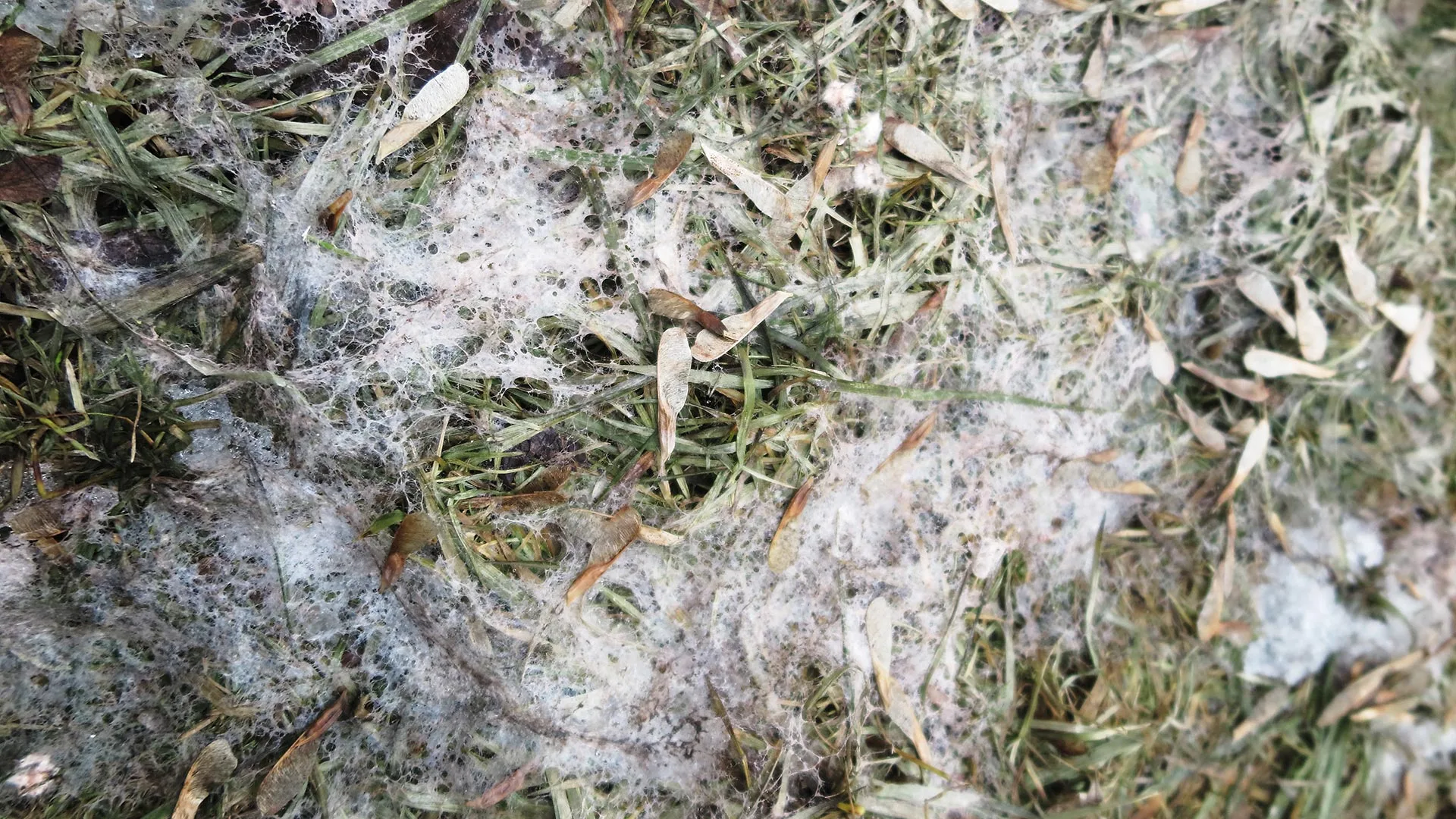


Snow mold or snow rot is common in the Appleton, WI area. You may not know what it is but you've probably seen it before. Either way, it's important that you know what it is and what it looks like so that you can identify it if it ever appears on your lawn.
If you notice round patches of dead grass accompanied by whitish-gray or pinkish rings after the snow has melted on your lawn, it is most likely snow mold. It usually appears in the spring, but the conditions that lead to snow mold occur from late fall to early winter. The good news is you can prevent it by protecting your lawn in the fall.
What is snow mold, and why does it occur?
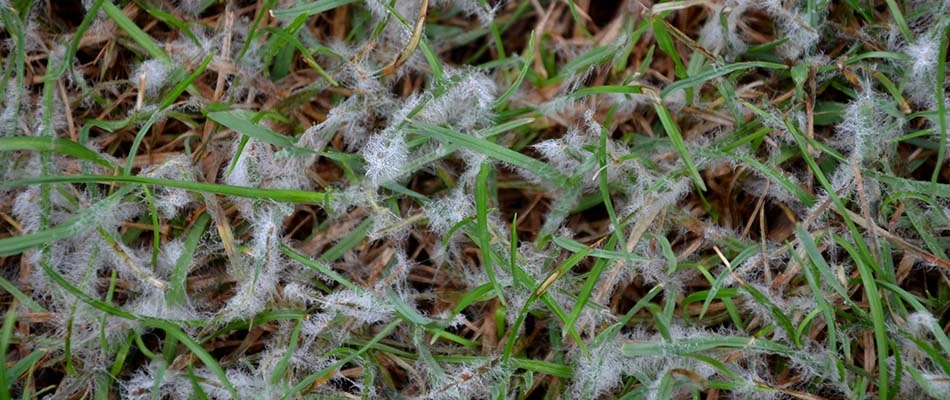
Snow mold is a lawn fungus that usually develops during the winter and shows up on affected lawns in the spring when the snow has melted. It looks like circular patches of dead grass surrounded by gray or pink rings. These two colors represent different types of lawn fungus: gray snow mold and pink snow mold.
- Gray snow mold - This lawn condition generally needs at least two months of continuous snow cover to develop. You can identify gray snow mold by furry white rings surrounding dead grass after the snow melts. The fungus known as Typhula blight causes gray snow mold.
- Pink snow mold - This turf disease thrives when your grass sits beneath the snow for extended periods. Pink snow mold attacks both top growth and the roots of your grass and is caused by Microdochium nivale.
Snow mold can form due to your soil's inability to absorb moisture or when your grass is too high going into winter. Tall grass folds under the pressure of the snow and provides a perfect breeding ground for mold.
Prevent snow mold by protecting your lawn ahead of winter.
You can keep snow mold from showing up in the spring by protecting your lawn this fall. Here are some ways to do so:
- Remove yard debris - Since the fungi that cause snow mold thrive beneath debris, you can help prevent snow mold by removing branches, leaf piles, twigs, etc. from your yard before winter hits.
- Mow your grass to the optimal height - Mowing your lawn to the correct height is another way to keep snow mold at bay. The key is to avoid mowing too short, as this removes most of the grass blade and hinders your lawn's ability to photosynthesize. If your grass grows to an excessive height going into winter, it could trap too much moisture and encourage snow mold.
- Schedule a fall fertilizer treatment - Another effective way to protect your lawn from snow mold is to apply fertilizer in the fall. Doing so strengthens your lawn going into winter and allows your grass to take in the nutrients necessary to fight lawn diseases like snow mold.
- Schedule a weed control treatment - By removing weeds from your yard, your grass won't have to compete with them for nutrients, water, and sunlight. This will help your grass become stronger, so it will have the strength to fight off snow mold.
Here in the Appleton, WI area, a great height for grass in the winter is between 2 and 2.5 inches.
Spring snow mold prevention starts this fall. Call us today to schedule service!
Don't let snow mold get the best of your lawn this winter. Here at Turf Badger, we offer high-quality services such as weed control and fertilization that will help prepare your lawn for the winter season.
We offer fertilization and weed control services in Appleton, Green Bay, Bellevue, and surrounding areas in Wisconsin. If you are located within this vicinity, don't roll out a welcome mat inviting snow mold to your lawn this spring. The best time to prevent snow mold is in the fall, so contact us today at 920-634-6780 to schedule our services.


Comments (0)
Thanks for your comment!
Thanks for your feedback! Your comments have been successfully submitted! Please note, all comments require admin approval prior to display.
Error submitting comment!
There is a problem with your comment, please see below and try again.